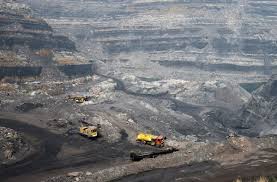
Here is something that sounds straightforward but is not. Not all coal is the same. There are four types — anthracite, bituminous, sub-bituminous, and lignite. The higher up the ladder, the more energy per kilogram and the cleaner it burns.
India is not sitting on a gold mine of coal it is sitting on a mountain of the cheapest most difficult coal on earth
The lower down, the harder it is to do anything useful with it. India sits almost entirely at the bottom two tiers. It has virtually no anthracite and almost no high-grade bituminous coal. Despite having the fifth largest coal reserves on the planet, India still imports coal from Australia — because the coal it has at home is not good enough to make its own steel.
A country with 400 billion tonnes of coal imports coal. That is where India stands today. The numbers make this concrete. Coal imported from Australia carries an ash content of 10 to 20%.
Indian coal carries 25 to 40% ash. More than 75% of Indian coal has over 30% ash content. The worst of it goes up to 50%. High moisture, low energy value, and poor washability make it difficult and expensive to clean.
In simple terms: when you burn Indian coal, nearly half of what you get is ash, not energy. "India is not sitting on a gold mine of coal. It is sitting on a mountain of the cheapest, most difficult coal on earth — and trying to turn it into the cleanest gas possible." Coal gasification works smoothly in the US and China because their coal is cleaner.
With Indian coal, the same process becomes significantly more complex, more expensive, and harder to run at scale. Adapting gasification technology to handle 30 to 50% ash content — consistently, across dozens of plants — is a problem that has not been fully solved anywhere in the world yet. India has conducted successful trials at these ash levels, which matters. But trials are not the same as 40 plants running continuously across the country.
The second challenge is economic and it may be the harder one to control. Coal-to-gas is only profitable when global gas prices are high. The moment global gas prices fall, it becomes cheaper to simply import LNG from Qatar than to produce synthetic gas from coal at home. And global gas prices fall often and sharply.
China has lived this cycle repeatedly. From 2004 to 2013, high global gas prices made China's coal gasification plants highly profitable. In 2014, prices fell 60% and many plants became loss-making. In 2022, the Russia-Ukraine war pushed prices up again and the plants recovered.
In 2024, prices fell once more and the plants started losing money again. Any Indian company investing ₹10,000 crore into a gasification plant is essentially placing a bet on global geopolitics — a variable nobody in Delhi or Mumbai can control. "If gas prices fall the week after a plant opens, the economics collapse. That uncertainty is exactly why private investors are holding back."
This is why large-scale investment still depends heavily on government support and why private players remain cautious despite the policy push. The government's current position is that coal gasification is an insurance policy — not a guaranteed profit machine. You do not buy health insurance because you plan to use it. You buy it because the day you need it, you cannot afford to be without it.
The day Qatar squeezes supply, the day a war disrupts shipping lanes, the day another sanction lands — a country with its own coal-to-gas infrastructure does not panic. A country without it does. The ambition is real. The reserves are real.
The technology has been proven in trials. But the gap between a successful trial and energy independence is filled with questions about coal quality, price volatility, and whether private capital will show up at the scale the mission needs. India has pulled off harder things before. Whether this is one of them is a question that ₹37,500 crore of public money is now being used to answer.
