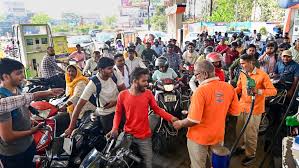
Prime Minister Narendra Modi is asking Indians to consume less fuel, travel less, use less air conditioning, and prepare for economic uncertainty. The messaging sounds spiritual, almost ascetic. Sacrifice today so the nation survives tomorrow. But the contradiction becomes impossible to ignore when the same citizen being asked to embrace austerity is also paying over ₹100 per litre for petrol while state-run oil companies continue reporting massive profits.
When citizens are told to reduce consumption while governments maximise taxation austerity stops looking like patriotism and starts looking like policy failure
“When citizens are told to reduce consumption while governments maximise taxation, austerity stops looking like patriotism and starts looking like policy failure.
The real issue is not merely rising crude oil prices. The real issue is whether the Indian consumer has quietly become the easiest source of fiscal extraction for the state. Every time fuel prices rise, governments invoke geopolitics, wars, sanctions, and global disruptions. But when crude prices collapse internationally, why does relief almost never fully reach the Indian consumer?
Why do taxes remain stubbornly high even during periods of cheaper imports? And if public sector oil companies are profitable, why is the burden still transferred onto ordinary households already struggling with inflation, stagnant wages, and economic uncertainty?
This is where the oil bond narrative enters the conversation. Successive governments, particularly after 2014, repeatedly argued that high excise duties were necessary because India was repaying oil bonds issued during the Manmohan Singh government between 2005 and 2010. Nearly ₹1. 4 lakh crore worth of oil bonds were issued to compensate oil marketing companies instead of immediately passing rising crude prices onto consumers.
The political logic was simple: delay the pain, postpone the fiscal shock, and protect voters from sudden inflation.
But here is the uncomfortable question nobody in power fully answers. If oil bonds were truly the central burden, then why did the government collect nearly ₹4. 55 lakh crore in petroleum excise duties in FY2021 alone, according to Union Budget and CAG data? That single year’s collection was several times larger than the peak oil bond liability itself.
So where exactly did the additional burden go? Why did consumers continue paying crisis-level taxation even when global crude prices were significantly lower? “The oil bond explanation may contain truth, but it does not contain the whole truth.
The structure of petrol pricing in India reveals the deeper problem. A substantial portion of what consumers pay has little to do with crude oil alone. Taxes, cesses, dealer commissions, freight charges, and state VAT together transform fuel into one of the government’s most reliable revenue instruments. This creates a dangerous incentive structure where citizens suffer regardless of global price movement.
When crude prices rise, retail prices rise. When crude prices fall, taxes rise. In both situations, the consumer loses.
The COVID period exposed this contradiction brutally. In 2020, global crude oil prices collapsed to historic lows. At one point, benchmark crude futures even turned negative. Logically, Indian consumers should have experienced major relief.
Instead, excise duties were sharply increased. The state expanded revenue collection while households continued paying elevated prices despite cheaper global oil.
“The savings of cheap crude were never socialised. The taxation of expensive fuel always was. Governments defend these taxes by arguing that fuel revenue finances roads, infrastructure, hospitals, and welfare programs. That argument is partially valid.
India’s infrastructure expansion over the past decade has undeniably accelerated. Highways, logistics corridors, airports, and rail modernisation require enormous public expenditure. But if fuel taxation is justified in the name of infrastructure, then where is the transparent accounting linking fuel cess collections directly to audited infrastructure spending? Why do parliamentary committees repeatedly raise concerns over utilisation patterns?
Why does so much of the revenue ultimately disappear into broader fiscal management rather than directly traceable public investment? This is no longer simply an economic debate. It is becoming a credibility debate. India imports nearly 85% of its crude oil requirements.
That makes the country deeply vulnerable to disruptions in regions like the Strait of Hormuz, through which a major portion of global oil trade passes. Every geopolitical shock immediately translates into domestic anxiety. Yet despite knowing this vulnerability for years, India’s strategic petroleum reserves remain far below the levels recommended by global energy security standards. So another question emerges.
Why is the burden of systemic energy insecurity repeatedly shifted onto individual behaviour? Why are citizens told to drive less instead of governments being questioned about long-term energy resilience, public transport investment, storage expansion, or taxation reform? “When systems fail structurally, governments often redirect the conversation toward individual morality. The political timing of fuel pricing also raises difficult questions.
Prices frequently remain stable before elections despite volatile global markets, only to adjust later once electoral pressure disappears. Oil marketing companies absorb temporary losses, governments intervene selectively, and pricing suddenly becomes political rather than market-driven. Consumers are not experiencing transparent fuel economics. They are experiencing managed political pricing.
And this is why public frustration continues to grow. Because every litre of petrol today carries three invisible costs simultaneously: the legacy of past fiscal decisions, the present dependence on fuel taxation, and the future price of geopolitical vulnerability. “The Indian middle class is no longer merely consuming fuel. It is underwriting the state’s fiscal survival.
