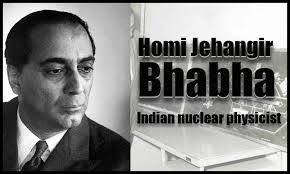
Homi Bhabha's three-stage nuclear plan was built around one core insight: India had almost no usable uranium, but it had thorium in abundance. The problem was that thorium cannot fuel a reactor directly. It has to be converted — and that conversion requires plutonium, which has to be produced first, through a carefully designed sequence. The plan was essentially a relay race across generations of reactors, each one feeding the next.
The reactors were not just generating electricity they were manufacturing the fuel for the next generation of reactors
Stage one was the starting point. Instead of enriched uranium — which India could not import — Indian reactors used heavy water as a moderator. Regular water slows neutrons but also absorbs them, which is why most countries need enriched uranium to keep the chain reaction going. Heavy water slows neutrons without absorbing them, which means natural uranium straight from the ground works perfectly.
No enrichment technology needed. No foreign supplier required. But stage one had a second function that most people do not know about. Natural uranium is 99.
3% U-238 — the stable kind that does not split — and only 0. 7% U-235, which is the kind that produces energy through fission. While U-235 was generating electricity at the front end, U-238 was quietly absorbing neutrons at the back end, transforming first into neptunium and then into plutonium-239. India ran 22 of these heavy water reactors for decades — generating power and, in the background, stockpiling plutonium for stage two.
"The reactors were not just generating electricity. They were manufacturing the fuel for the next generation of reactors." Stage two is the fast breeder reactor — and this is what achieved criticality at Kalpakam on April 6, 2026. Indian scientists took the plutonium accumulated from stage one, mixed it with depleted uranium, and created what is called MOX fuel — mixed oxide fuel.
This goes into the core of the fast breeder reactor. Unlike stage one reactors, the fast breeder has no moderator at all. Neutrons move at 20,000 kilometres per second. At the core, plutonium atoms split, releasing enormous heat that generates electricity.
Each split throws out two to three fast neutrons. Those neutrons slam into U-238 in the surrounding blanket. U-238 absorbs them and converts into brand new plutonium-239 — which then feeds back into the core. The reactor burns fuel and manufactures fuel at the same time.
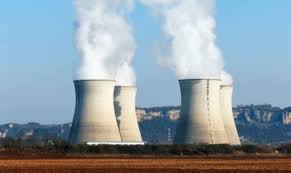
That is not a simplified version of what happens. That is exactly what happens. The global superpowers spent a combined $50 billion trying to make this work. India spent $1 billion and did it.
"The world spent $50 billion and failed. India spent $1 billion and achieved criticality. Bhabha designed this in the 1950s. It took 70 years to prove him right."
Stage three is where thorium finally enters the picture. Once India builds enough plutonium through a fleet of fast breeders, the uranium blankets around the reactor core get replaced with thorium blankets. Thorium-232 absorbs the fast neutrons and begins converting — first into thorium-233, then into protactinium-233, and finally into uranium-233. That uranium-233 is the fuel for stage three.
Advanced heavy water reactors burn it to generate electricity. And the fuel source for all of this is the thorium sitting on India's beaches — 8. 5 lakh tonnes of it, enough for 400 years of energy at current consumption levels. The Kalpakam milestone is stage two becoming reality.
It is the bridge between the plutonium that decades of stage one reactors quietly produced and the thorium future that Bhabha outlined when India was still figuring out how to feed itself. Every stage one reactor that ran at half capacity during the 30-year nuclear lockout was still doing its job — accumulating what stage two would need. The question now is how long stage three takes. There is no fixed answer.
It depends on how quickly India scales its fast breeder fleet, how much plutonium it can accumulate, and whether the political will to treat this as a national priority holds across governments and decades. What is no longer a question is whether the science works. On April 6, 2026, at 8:25 in the evening, inside a dome on the Tamil Nadu coast, that question was answered.
