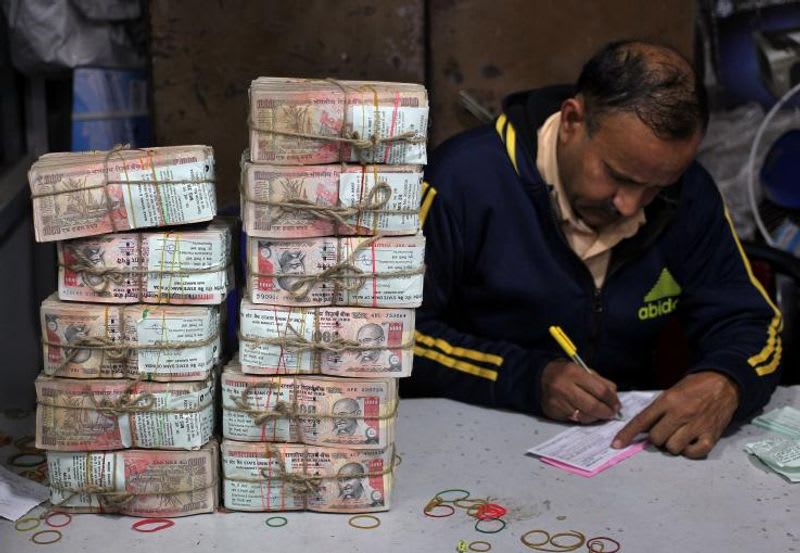
High-value notes still account for 85% of cash in circulation, 10 years after demonetisation was announced to break their hold on the economy. In his address on the night of November 8, 2016, Prime Minister Narendra Modi said such notes made up 80 to 90% of all cash and fuelled corruption. The notes are now mainly ₹500 denominations.
The ban wiped out 86% of India's currency. The stated goals were to curb black money, clean up corruption, render fake banknotes useless and stop terror funding.
Cash transactions have not shrunk for good. Cash transaction reports filed by banks, which flag high-value cash transactions, dropped for a few years after demonetisation. By 2023, they had returned to levels seen before it.
The note ban changed the denominations in people's wallets. It did not change how untaxed money moves.
Fake currency shows a mixed record. Reserve Bank of India data shows a drop in fake banknotes over the last decade, and seizures of fake notes have increased. That has not translated into stronger action against terror financing.
In 2023, the government shared terror-financing data with the Financial Action Task Force, the global watchdog. Between 2018 and 2023, India prosecuted 1,530 people for terror financing. Convictions were secured against 89. That is a conviction rate of 6%.
Corruption rankings have barely moved. India was ranked 96 on the Corruption Perceptions Index in 2013. Its rank in 2025 was 91. By the Prime Minister's own measure, the cleanup of public life has not materialised.
A promised cleanup that leaves the rankings where they were is a promise unkept.
The Basel anti-money laundering index points the same way. India ranked 88th out of 162 nations in 2014. By 2025, it stood 60th out of 177 countries. A lower position on the index means a weaker anti-money laundering regime.
Benami enforcement is thin. Only 7 cases have been filed under the anti-Benami law since 2017. There were none in 2017, 2019, 2021 and 2024.
Modi singled out black money in illegal arms sales and in elections. The Global Organized Crime Index scored India's criminality on arms trafficking at 5.5 in 2021, the year the index was founded. The score rose to 6 in 2023 and stayed there in 2025.
Election Commission of India data shows cash seizures rising with each Lok Sabha election. The Commission seized ₹304 crore in 2014, ₹804 crore in 2019 and ₹1,067 crore in 2024.
Citizens queued outside ATMs for a cleanup that the official numbers do not show.
No official statement has reconciled these outcomes with the goals set out on November 8, 2016. No response from the government to the data is on record.
If high-value cash still dominates, convictions remain rare and election seizures keep climbing, what did the 2016 sacrifice buy? The government has yet to say.