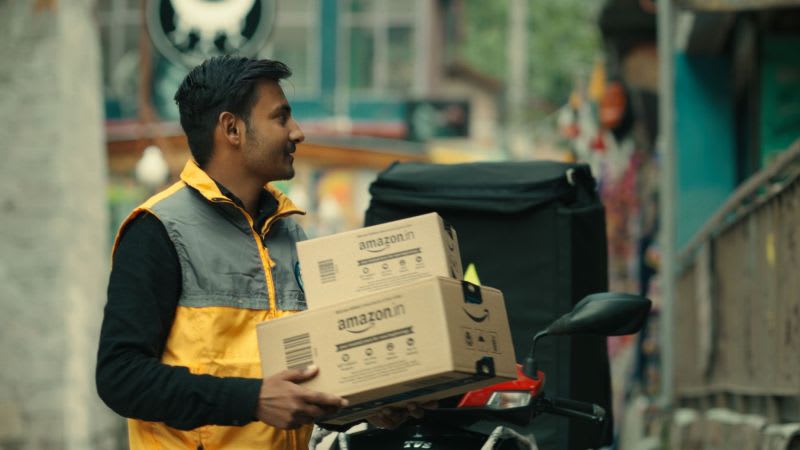
Delivery workers for Amazon and Flipkart earned ₹12 to ₹15 per parcel this festive season. Last year they earned ₹25 to ₹28. The pay cut came in the same weeks that both platforms ran their biggest sales of the year.
Deliveries during Amazon's Great Indian Festival and Flipkart's Big Billion Days fell 10% to 12% from last year. Gross merchandise value on the two platforms fell 7% to 10%. Neither company has published these figures, and no response from either is on record.
The sales were held at the start of October. The government had expected the festive season to lift work and incomes. For delivery workers on the big platforms, pay has moved the other way.
Falling sales at the big platforms are being paid for by the people who deliver the parcels.
Work has shifted to quick-commerce apps instead. Swiggy, Zomato, Blinkit and Zepto delivered more household goods than Amazon and Flipkart did this season. Workers on these apps earn ₹20 to ₹30 per delivery. At times of peak demand, in rain or in festival crowds, they earn ₹8 to ₹15 more per delivery.
Demand for gig workers rose in both segments. Deepesh Gupta, head of general staffing at Adecco India, said demand for gig workers in quick commerce rose 18% this festive season. In e-commerce it rose 12%.
He said higher demand has not meant higher wages.
More demand for gig workers has not produced better pay for them.
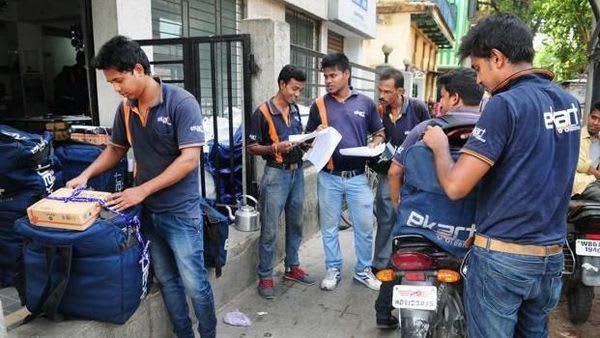
The numbers describe a squeeze. Workers who once delivered for the large marketplaces are being pushed towards quick-commerce apps, because pay per parcel at Amazon and Flipkart has fallen to roughly half of last year's level. Quick-commerce rates for a single delivery are higher, but the work depends on peak-hour demand and weather.
The wider labour picture offers little cushion. Economist Santosh Mehrotra has argued that real wages have not risen for 8 years and that job creation outside agriculture has slowed. In his assessment, any festive improvement in earnings lasts a month or so before conditions return to where they began.
Gig workers sit outside most of the protections that apply to regular employees. No regulator has set a floor for per-parcel pay on e-commerce platforms. No government statement on the reported cuts is on record.
The platforms set the rates. The workers take the loss when sales fall.
A festive season that shrinks sales and halves pay is not a boost to employment.
Whether Amazon and Flipkart will explain the cut, and whether any authority will examine how it was decided, remains unanswered.