For lakhs of Indian students, NEET is not merely an entrance examination. It is a national obsession built on sacrifice. Entire families reorganise their lives around it. Parents take loans, mortgage jewellery, move cities for coaching centres, and place years of emotional and financial investment on one exam that promises merit-based opportunity.
Students can tolerate difficulty what they cannot tolerate is the suspicion that the competition itself may not be fair
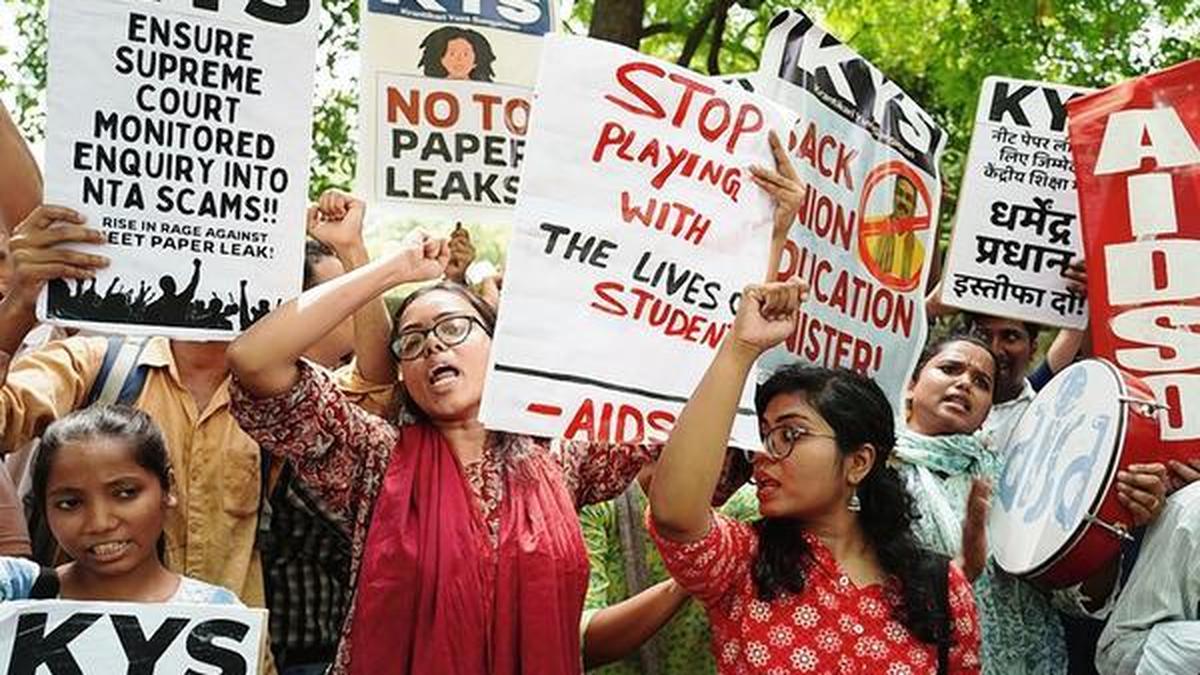
Which is why the latest NEET leak controversy has triggered something far bigger than student frustration. It has triggered a collapse of trust. The outrage this time is not just because an exam may have been compromised. It is because students increasingly believe the system itself has become compromised beyond repair.
The official response has followed a now-familiar script — investigations, committees, reassurances, cancellations, promises of stricter monitoring. But students across the country are asking a far sharper question: if one of India’s most high-security examinations can allegedly be breached repeatedly despite surveillance systems, biometric verification, GPS tracking and multiple layers of monitoring, then where exactly is the failure located? At the centre level? During transport? During printing? Or somewhere much higher? That question has become unavoidable after claims emerged that material resembling actual NEET questions had circulated before the examination. Reports under scrutiny suggest that dozens of questions allegedly matched the final paper, raising fears that this was not a last-minute leak but a deeper breach involving the examination ecosystem itself.
And this is precisely why public anger has exploded. Because students can tolerate difficulty. What they cannot tolerate is the suspicion that the competition itself may not be fair. Nearly 22 lakh aspirants compete for around one lakh medical seats. The pressure is already brutal. A single mark can alter rankings by thousands. In such an environment, even the perception of manipulation destroys confidence.
What makes the crisis politically dangerous is that this is no longer being viewed as an isolated incident. Students are connecting it to a wider pattern of recurring paper leaks across recruitment exams, teacher eligibility tests, police recruitment drives and entrance examinations over the past few years. India’s examination culture now appears trapped in a cycle where leaks are exposed, outrage erupts, arrests are made at lower levels, and then the system quietly resets until the next scandal.
Meanwhile, the consequences are borne almost entirely by students. The privileged can afford another attempt. The middle class somehow stretches one more year. But for economically weaker families, every cancelled exam means another year of fees, rent, coaching costs and emotional exhaustion. Many students spend their most formative years locked inside a preparation cycle with no certainty that the process itself is credible. That psychological breakdown is now becoming visible online. Social media platforms are flooded with students openly questioning whether merit still matters. Increasingly, the anger is no longer directed at one agency or one government. It is directed at the larger institutional machinery that repeatedly promises reform while producing the same failures.
And perhaps the most uncomfortable truth is this: India’s youth no longer see these leaks as shocking. They see them as expected. That normalisation may be the most dangerous development of all. Because once a generation loses faith in the fairness of opportunity, the damage extends beyond examinations. It reaches employment, governance, public trust and eventually social stability itself.
The NEET crisis is therefore no longer only an education story. It is becoming a national credibility crisis.
