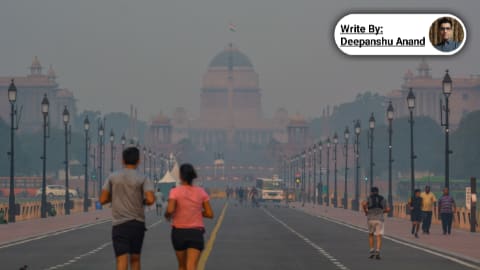
New Delhi: Winter has officially arrived in the capital, bringing along its dreaded annual companion—air pollution. While past years saw Delhi's air plunge straight into the very poor category right after Dussehra, this season has started with a slightly better yet concerning poor rating, with air quality visibly worsening during morning and evening hours.
Tackling the Dust: GRAP-1 and Mitigation Efforts
To control the situation, the government has enforced GRAP-1 restrictions, which bring strict regulations on construction activities and dust emissions.
Although a few violations involving airborne soil have been observed, authorities are working actively across the city. Water sprinklers and anti-smog guns are being heavily deployed in various areas to suppress pollutants.
Current AQI and Health Advisory
Data from the Central Pollution Control Board (CPCB) shows that pollution levels near India Gate crossed 145, and the air quality is expected to remain in the poor bracket for the coming days.
Health experts strongly advise citizens to wear N-95 or N-99 masks when outdoors. Individuals with respiratory conditions should stay indoors and consult a doctor immediately if they experience breathing difficulties.
Major Health Causes and Preventions
-Respiratory Issues (Asthma & Bronchitis): Fine particulate matter (PM 2.5) penetrates deep into the lungs, triggering severe asthma attacks and chronic bronchitis. Prevention: Use N-95/N-99 masks outdoors and keep inhalers handy if diagnosed with respiratory issues.
-Cardiovascular Strain: Toxic pollutants enter the bloodstream, elevating blood pressure and increasing the risk of heart attacks and strokes. Prevention: Avoid strenuous outdoor exercises during peak smog hours and monitor heart health regularly.
-Eye Irritation and Allergies: Smog and gaseous pollutants cause burning, redness, and watery eyes. Prevention: Wash eyes frequently with clean water and wear protective eyewear or glasses when stepping outside.
-Immune and Throat Complications: Persistent inhalation of polluted air leads to chronic throat irritation, coughing, and lowered immunity. Prevention: Stay well-hydrated, consume warm fluids, and use air purifiers indoors when possible.
Additional Steps and Future Outlook
As the winter season progresses, authorities are planning to ramp up checks on vehicular emissions and waste burning, which are major contributors to the city's seasonal smog. Citizens are encouraged to use public transport, carpool, and minimize unnecessary private vehicle usage to help lower local emissions. Environmental experts emphasize that community cooperation alongside governmental measures remains crucial in managing Delhi's annual air quality crisis effectively.
Key Takeaways and Preventive Measures
-Vehicular Control: Increased monitoring of traffic emissions and promotion of electric or public transport to curb tailpipe pollution.
-Waste Burning Ban: Strict penalties and surveillance against illegal garbage and biomass burning across residential and industrial pockets.
-Real-Time Monitoring: Continuous tracking of AQI metrics by environmental agencies to trigger higher stages of GRAP if conditions worsen further.
-Public Awareness: Community-driven campaigns to educate citizens on smog safety, carpooling, and minimizing dust-generating practices at home and work.
Extended Insights and Collective Responsibility
-Green Cover Expansion: Planting urban forests and maintaining roadside greenery to naturally filter dust and particulate matter.
-Industrial Compliance: Enforcing strict emission standards for local manufacturing units to prevent illegal nighttime dumping of pollutants.
-School Guidelines: Advising educational institutions to limit outdoor assembly and physical sports during peak smog hours.
-Citizen Action Groups: Encouraging local resident welfare associations to monitor and report neighborhood waste burning violations instantly.
Conclusion
Delhi's annual battle with winter pollution is a reminder that seasonal smog requires a united front from both governance and society. While GRAP-1 measures, dust suppression, and health advisories provide immediate defense, long-term relief depends heavily on consistent policy enforcement and conscious citizen participation. Protecting the capital's skies and public health is a shared responsibility that demands sustained action beyond just the winter months.