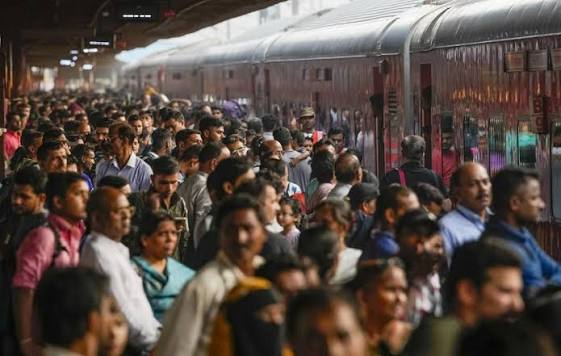
A porter quoted ₹800 to carry luggage to a platform at New Delhi Railway Station. Another asked ₹450 just to seat a passenger. Travellers say porter rates now climb with the festival calendar the way flight fares do.
Chhath and Diwali have pulled thousands of families to the station. They carry children, sacks and bundles, and they all want to reach a village. The authorities made the usual announcements: special trains, holding areas, and a suspension of platform tickets until 14 November so platforms do not fill to the point of a stampede.
Those measures have not reached the booking window. Reservations open 60 days before travel, and passengers say every seat is gone within 2 minutes. One man said he had struggled for three months, and at least six, to get tickets to Bhopal, Jodhpur, Jaipur, Ludhiana and Jalandhar. Another family from Muzaffarpur booked at midnight on the first day, two months out, and still got one RAC (Reservation Against Cancellation) berth among three tickets. If a family that books at midnight on opening day cannot get a confirmed seat, what chance does anyone who tries five or six days ahead have?
Those who miss out buy general tickets. A passenger from Betul, who spent 15 days in Delhi on a project in Meerut, expects 18 to 20 hours in a general coach. Another family faces 9 hours 10 minutes with small children. Passengers listed the same problems: no seat, dirty toilets, scarce water, and no room for luggage.
The moment the booking window opens at 60 days ahead, everything is sold out within 2 minutes.
That sentence came from a traveller who gave up on reservations. The special trains do not address it, because the shortage starts at the booking window, long before anyone reaches the platform.
The platform-ticket ban created its own problem. Station staff told passengers that only ticket holders can enter, and only after 7:30 pm. A senior citizen who had just had a heart operation could not get his companion inside. A student seeing off his younger sister was turned back at the gate. A passenger with a 6:40 train had 10 minutes left and was still hunting for a porter. People with heavy luggage need helpers, and the rule removes the helpers.
Corruption fills the gap, passengers claimed. A student at Mukherji Nagar said he spends ₹15,000 a month and has ₹1,500 set aside for tickets, yet cannot buy one. He claimed an RPF-linked arrangement gets a seat on the Sampoorna Kranti to Patna for ₹200. Another passenger said a middleman delivers a ticket for ₹500.
Corruption has spread from the government to the system; if you pay a middleman ₹500, he will arrange it for you.
These are passengers' allegations, and no official responded on record. But they all describe the same market: those who can pay get a seat, and the rest stand. One passenger asked whether anyone has ever seen a minister travel in a general coach.
The cost lands on students, labourers and families who cannot skip the festival. They will stand, share a seat or pay a stranger, because Chhath is celebrated in the village. One passenger recalled that tickets were easier to get when Lalu Yadav was railway minister.
The same measures return every year, and so do the same crowds. A railway that knows the date of Chhath months ahead still meets it with emergency arrangements, and the people at the gate are the ones paying for that.