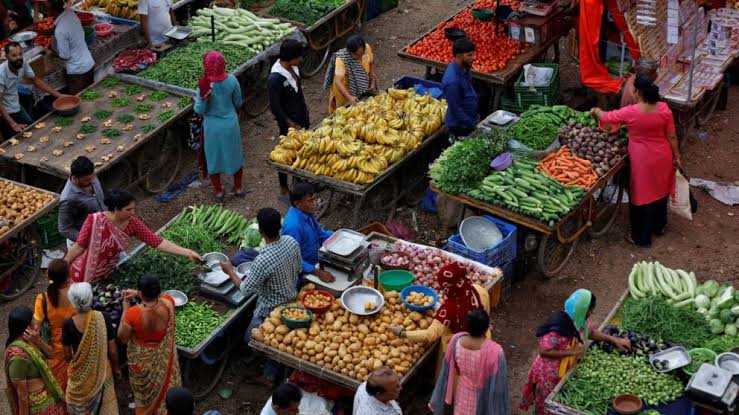
Food inflation in India has risen every month since June, from about 5.3% to 8.9% in October. That is its highest level in 23 months. The food basket now costs about 9% more than it did a year ago.
The monthly readings tell the story. Inflation was 5.5% in July, 6% in August and 7.7% in September. Onions, lentils, sugar, cooking oil and milk have all become dearer, analysts said.
El Niño, the abnormal warming of Pacific waters, is the main driver. It began in April. Its effect on rainfall became visible from August. The monsoon season ended with a deficit of about 13%. The northeast monsoon, which follows October, is running about 34% short.
Wholesale markets reflect the damage. Maize in Vijayapura, Karnataka, now sells at ₹3,139 per quintal, up from ₹1,700 a year ago. Tur in Latur, Maharashtra, has risen from ₹6,700 to ₹10,200 per quintal. Soybean has gone from ₹4,200 to ₹7,000.
Cotton has climbed from ₹7,500 to ₹9,060 per quintal. Bajra has moved from ₹1,950 to ₹2,600.
Tur has gone from ₹6,700 to ₹10,200 per quintal in a year. Households are already paying for a failed monsoon.
The winter crop has also started weakly. Farmers have sown 15% less wheat than at this time last year. Gram sowing is down 22% and mustard 8%. Soil is dry, and reservoir and groundwater levels are falling.
Analysts warn the pressure may last. During the 2023-2024 El Niño, average food inflation exceeded 8.5% between July 2023 and December 2024. This episode is expected to be stronger. Analysts said it may become the strongest on record, peak in December and continue until about March. Its after-effects typically last another 6 to 7 months, which could reach into the next southwest monsoon.
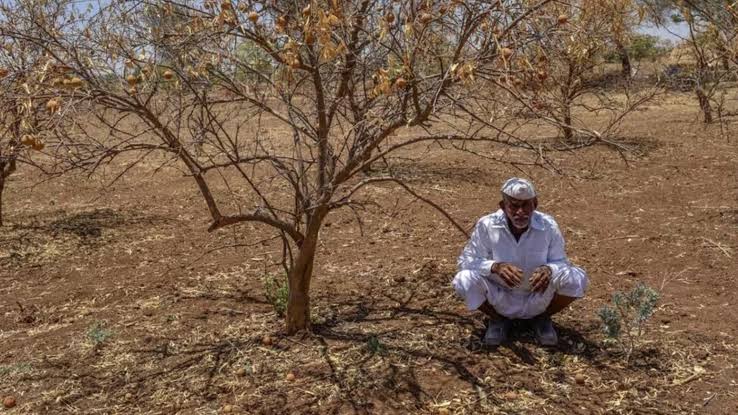
Consecutive failures are the fear. Analysts pointed to the droughts of 1965-66 and 2014-15. Food inflation was very high in 1965-66.
If this monsoon is poor and the next is poor too, the damage will touch every food commodity.
Government buffers are larger than in 2023-2024, analysts said. Rice stocks stand at 55.5 million tonnes, the highest ever for this time of year. Wheat stocks are at 46 million tonnes, the highest in 5 years. The government holds about 3.8 million tonnes of pulses, including chana, lentils and moong.
Global conditions are better for now. World crops of rice, wheat, maize and sugar have hit record levels. International food prices remain well below their 2022 peak after Russia's invasion of Ukraine. Cooking oil and sugar prices are nonetheless at multi-year highs. Indonesia and Brazil are diverting more palm oil, sugar and maize into fuel production, which could push them higher.
So far, traders have been required to disclose their pulse stocks weekly. Tamil Nadu has set stock limits. Analysts said the Centre could cut customs duty on pulses and edible oil imports. It could also extend the duty exemption on sugar and cotton imports beyond December. No such decision has been announced.
Warehouses are full. Duty cuts remain only an option. The strongest El Niño on record is still forming.
The tools exist. The open question is when the government will use them, in what order, and whether it will act before a second weak monsoon makes the choice for it.