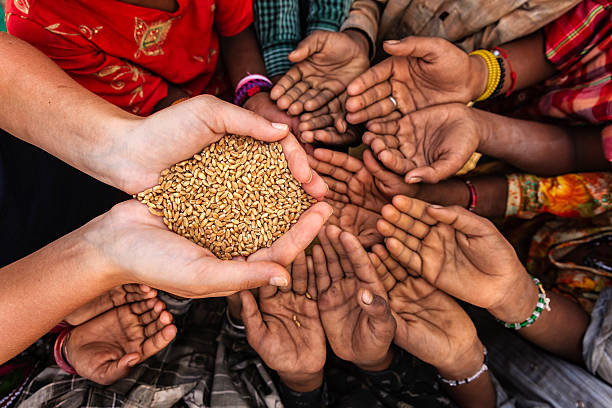
In October 1965, Prime Minister Lal Bahadur Shastri asked every Indian to give up one meal a week. By 1966, an average of three American ships docked daily at Indian ports carrying grain. Sixty-one years later, Dr. Jaishankar is warning of another food crisis.
The odd part is that India's granaries are full. It holds about three times the grain reserve it needs for emergencies, and it feeds 810 million people free every month. So the warning does not start in a warehouse. It starts with a 45 kg bag on a ship in the Strait of Hormuz. Dr. Jaishankar described the "Four F's": fuel, food, fertiliser and finance. They are one chain, not four problems.
Fuel is the first link. India imports more than 88% of its crude, and before the war 40 to 50% of it passed through Hormuz. Delhi widened its suppliers from 27 countries to 41, so no single seller can choke the supply. Yet the strategic crude oil reserve covers only 9.5 days, even when full. Oil companies hold stocks for about 74 days, but those stocks also feed LPG, jet fuel, plastics, pharmaceuticals, cement and aluminium. Draw them down for petrol and diesel, and those industries pay.
Who pays for the gap? India's crude basket hit $117.4 a barrel against an average of about $66 last year, yet pump prices barely moved. Indian Oil, BPCL and HPCL absorb about ₹530 crore every day. They lose ₹8 on each litre of petrol, ₹9 on each litre of diesel and ₹300 on each LPG cylinder.
Your bread is Indian, but your cooking oil comes from Indonesia and Malaysia.
India imports 56% of its cooking oil and 15 to 20% of its pulses. It grows about 3.6 million tonnes of tur dal and eats about 4.4 million. Grain security does not cover the rest of the plate.
Fertiliser is the second link, and it runs through the same strait. The government pays ₹3,000 for a 45 kg bag of urea. Farmers pay ₹242. The urea subsidy costs about ₹1.1 lakh crore, and the Centre spends more on fertiliser subsidy than on education or healthcare. Stocks look healthy, with 6.8 million tonnes of urea on 30 September, the highest in several years. Even so, farmers still queue from 4 a.m. because distribution fails.
The monsoon then tightened the squeeze. It ended 13% below normal, with a 26% shortfall in the east and northeast, a 24% fall in the south and drought declared in five states. Food takes 47% of household spending in rural India and nearly 40% in urban India. In the United States it takes 12.9%.
When millions of households cut spending together, the entire Indian economy slows.
Poor families already spend nearly half their income on food. When pulses, oil and onions cost more, they buy fewer clothes, shoes and bicycles. Finance then closes the loop. Foreign investors pulled more than ₹3.05 trillion from Indian equities in the first nine months of 2026. The rupee weakens, imports cost more, and fuel gets dearer again. The Reserve Bank's $747.56 billion in reserves covers about 11 months of imports against a global floor of 3. That cushion slows the panic. It does not stop the loop.
After her call with the American president in 1966, Indira Gandhi said she never wanted India to beg for food again. The Green Revolution followed. India solved grain, and left fuel waiting.
Nobody in Delhi has set a date for solving the dependency that now sits on the same ships.
