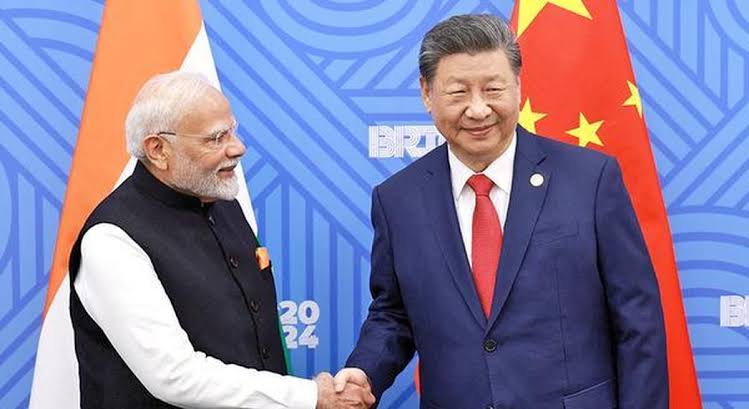
Thirty-five meetings between Indian and Chinese military officials have not stopped soldiers from squaring up on a mountain trail. The head of the Indo-Tibetan Border Police (ITBP) confirmed that troops from the two armies faced off in recent weeks, and that some of those face-offs continue.
The ITBP is a paramilitary force that guards India's northern and north-eastern frontier, including the border with Tibet, which China now holds. Its Director General said the latest incidents took place in Arunachal Pradesh, the state in India's far east. He gave no official timeline, but said they happened in the last few days. The timing matters. Chinese President Xi Jinping was in Delhi for the BRICS summit weeks earlier and met Prime Minister Narendra Modi on 12 September. The two leaders spoke about improving ties and stabilising the border, work that has run since the deadly Galwan Valley clashes of 2020.
The chief drew a careful line. A face-off, he said, is not an armed act. It can mean an argument during a patrol or a verbal confrontation. A clash is different. It involves military mobilisation or actual combat. Nobody has reported a clash. But the border stays sensitive, Indian forces remain deployed, and both sides are working to reduce friction.
So why should a shouting match on a patrol route worry anyone?
Because of how these episodes start. India's Ministry of External Affairs said the situation in border areas is disturbed from time to time when Chinese forces deviate from their usual patrol patterns. Both sides, it said, keep using existing diplomatic and military mechanisms to settle open issues and avoid misunderstanding and miscalculation along the Line of Actual Control. They also agreed to discuss how to improve their understanding of the Line of Actual Control in the right areas. The ministry added that peace and calm on the border are essential for the wider development of the relationship.
The sequence is simple. A change in Chinese patrol patterns disturbs the border. The disturbance produces a face-off. A face-off can derail the diplomacy meant to prevent exactly that. The Galwan Valley clashes of 2020 left dead on both sides, and they showed how fast a border dispute can turn.
China tends to turn routine disputes into serious problems.
That is the reason the chief gave for concern, and it explains why a dispute with no shots fired still counts as news.
The Director General also spoke about the balance of strength. Beijing, he acknowledged, has invested heavily in modernising its army. China has the bigger army and the bigger economy. But military power is not measured by those factors alone, he argued, least of all in the high Himalayas. His answer was to change the kind of fight India prepares for.
We cannot confront China by the usual conventional methods.
His alternative is non-conventional combat, such as drones and guerrilla warfare. India, he said, is already focused on asymmetric warfare and is training thousands of troops specialised in drone attacks. He added that this is no reason to panic.
For the soldiers on those patrols, the stakes are immediate. For everyone else, they are a matter of whether the border stays quiet enough for talks to continue. Face-offs that keep going while leaders shake hands mean the diplomacy depends on the behaviour of patrols on the ground. If one incident goes wrong, the process that took years to build could stall or end.
Xi's visit was a significant diplomatic event. But a bilateral meeting does not mean a settlement. For now, both sides must keep talking, while New Delhi keeps training, modernising and staying ready.
Diplomacy can pursue peace for now, but only military readiness protects it, and India cannot afford to neglect either.
Thirty-five meetings have produced dialogue. They have not yet produced a border where patrols pass without a standoff.