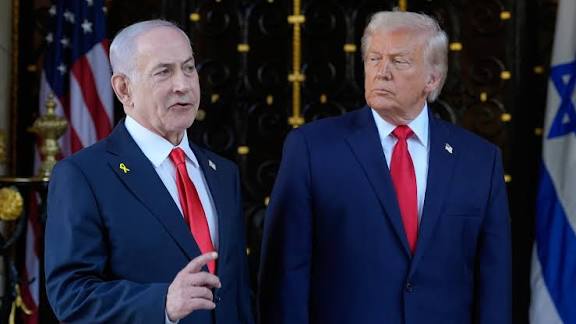
Israeli Prime Minister Benjamin Netanyahu has demanded immediate, decisive bunker-buster strikes on Iran's deepest underground nuclear and military sites. The targets include Pickaxe Mountain, south of Natanz. The demand has been put to Washington.
Netanyahu's argument is that waiting is dangerous. Iran's procurement network, he has argued, continues to operate despite the naval blockade of the Strait of Hormuz. Israeli officials, in this reading, see no reason to give the network more time to refill underground depots.
The timing is deliberate, according to the allegation made in strategic circles. The results of the US midterm elections have created political difficulty for the Trump administration. Netanyahu is said to be using that window to press his case on Washington. No official statement from the White House on the demand is on record.
Waiting is suicidal when the procurement network is still refilling underground depots.
A second track runs alongside. Talks are under way in Doha, Qatar, on a confidential diplomatic arrangement. It includes a proposal to fully reopen the Strait of Hormuz within 48 hours, in exchange for conditions that have not been made public. No party to the talks has published the terms.
The two tracks pull in opposite directions. One seeks a rapid reopening of the world's most important oil chokepoint. The other seeks strikes that could close it for far longer. Washington has not publicly said which it favours.
No government or institution has published an assessment of what bunker-buster strikes on these sites would mean for civilians, for shipping in the Strait, or for regional escalation. Nor has it been made public whether the Doha proposal has been formally answered by Washington or Tel Aviv.
Iran is holding a peace offer in one hand while filling its bunkers with the other.
The stakes reach beyond the region. India sources a large share of its crude through the Strait of Hormuz. Any prolonged disruption in the waterway would reach Indian fuel prices, the rupee and the stock market. Indian officials have not set out a contingency plan for strikes on Iranian sites.
The Netanyahu government's position has not been put in writing for public scrutiny. The Trump administration has not said whether it has accepted, rejected or deferred the request. Iran's response to the demand is not on record.
The question now is which clock runs out first: the 48-hour offer in Doha, or Washington's patience with it. Whoever decides will do so without any published assessment of what the strikes would cost.