Singapore's Prevention of Corruption Act, enacted in 1960, lets a court treat wealth beyond known income as corroborating evidence of corruption. It presumes a public servant who accepts any gratification to be corrupt. India's law has the same provisions. Section 20 carries the presumption and Section 13(1)(b) covers disproportionate assets.
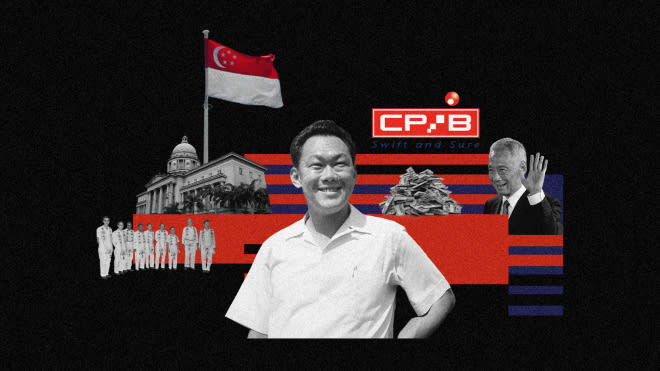
The difference lies in what followed the law. Singapore had also set up a separate investigating agency, the Corrupt Practices Investigation Bureau, because police could not be trusted to investigate police. The Prime Minister's 1959 decision to cut government employees' pay and return gifts sent a signal from the top.
Singapore's approach was a business strategy as much as a moral one. A Dutch economist leading a United Nations team advised the city-state that it had no resources of its own and needed foreign capital. Foreign companies, the team said, would come only if strikes, nationalisation and bribery were ruled out.
A lock without a guard is just a decoration.
Pay came later. A 1994 White Paper linked ministerial salaries to the top earners in the private sector. The 2026 figures are S$1.1 million a year for an entry-level minister and S$2.2 million for the Prime Minister. Public anger forced a cut in 2012.
A Harvard Business School study of 33 public hospitals in Buenos Aires during Argentina's 1996-97 anti-corruption crackdown measured the prices each hospital paid for identical items. Its point was that higher salaries did little where enforcement was absent. Gary Becker's 1968 work on crime makes the same case: a person offends when the expected benefit exceeds the expected punishment.
The gap in India is in the second half of that equation. In December 2025, the government told Parliament that the Enforcement Directorate registered more than 6,400 money-laundering cases in 2024. Of these, 56 trials were completed on merit. 53 ended in conviction.
Starting a case is easy in India. Finishing one is nobody's job.
Parliamentary data also shows 1,993 cases against politicians between 2015 and 2025. They produced 2 convictions and 0 acquittals. Zero acquittals does not mean everyone is guilty. It means the cases have not ended.
Section 17A of India's anti-corruption law, amended in 2018, requires government approval before an inquiry into a public servant's official decisions. On 13 January 2026, the Supreme Court delivered a split verdict on it. Justice B.V. Nagarathna held the provision unconstitutional and said it shields the corrupt. The other view upheld it but held that approval should come from the Lokpal or Lokayukta rather than the government. The matter now goes to a larger bench.
Singapore's investigating bureau reports directly to the Prime Minister. If the Prime Minister blocks an investigation, the President's concurrence is needed.
Salary works only when enforcement is already alive.
Singapore also makes it an officer's duty to report a bribe offer and to have the bribe-giver arrested. An officer who does not can face action. In 2025, 22 cases were recorded in which an officer reported an offer and the bribe-giver was caught.
India has no comparable duty. No government statement has said who is responsible for closing cases that were opened a decade ago, or when they will be closed.