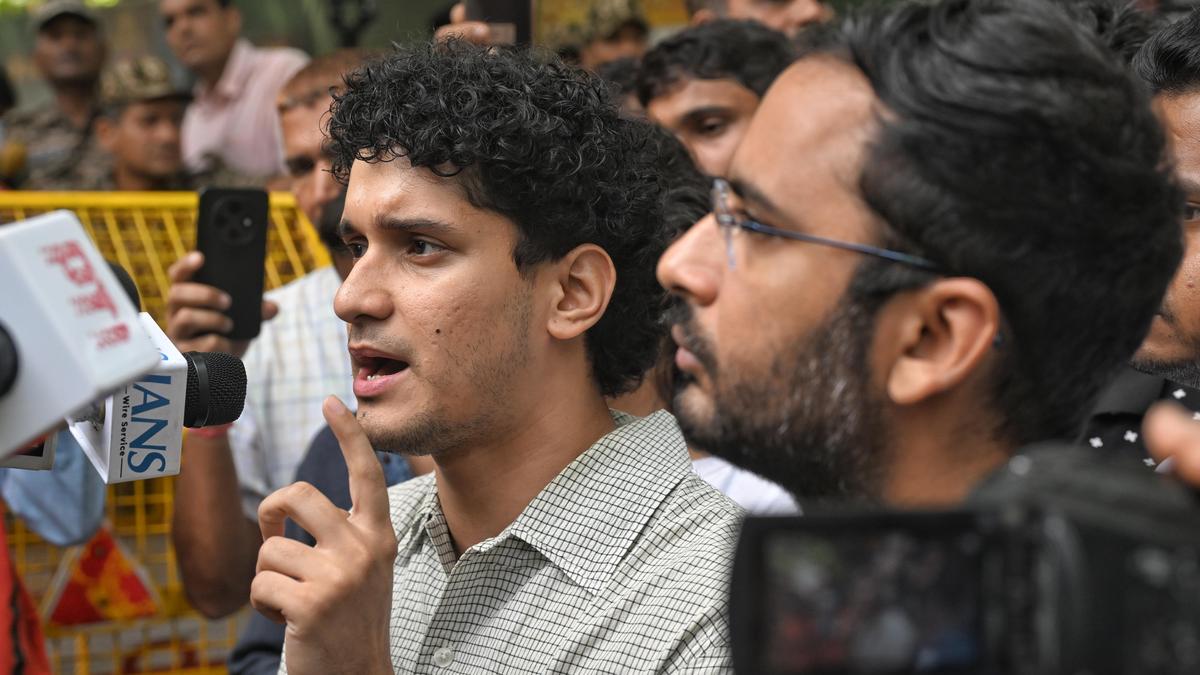
The protest was symbolic. The weapon was a flag. The penalty was seven days in Tihar Jail. Sourav Das and Ashutosh Ranka walked out on bail after a Special Executive Magistrate (SEM) granted relief once fresh sureties were submitted and release orders went out. Police had arrested them on 14 October and sent them to five days of judicial custody. On 19 October, the day release was expected, the custody was extended by two days.
The Delhi High Court was due to hear their case. Justice S Prasad's bench, as Lime Law reported, said personal liberty is sacred, but that the petitioners should use the legal remedy already available. The petition was withdrawn, and the two returned to the same magistrate who had extended their custody. So what exactly did they do? They went to Jantar Mantar with a few young people, waved the tricolour and made no larger call to protest. Ravish Kumar compared it to someone running onto a cricket ground with the national flag: the game pauses, the person is escorted off with respect, and nobody spends a week in jail. Who gets jailed for that?
Ratna Singh of the Cockroach Janta Party described how the 19 October hearing went. She wrote on X that the SEM court had told them the hearing would start at 12:00 noon. The magistrate, though present in the police station, did not enter the courtroom until 5:00 pm, she claimed. He then refused to hear the case on merits, the argument shifted to a question of threat, and custody grew by two days. Police had sought five more days, citing imminent threat. The defence argued there was none, and no call for any protest. Justice Prasad's oral remark sounds balanced, but it left two men in custody while the remedy was sorted out, and a week passed before the SEM acted. Kumar placed the arrests beside other cases. Akriti Chaudhary, 25, a student, was booked under the NSA by the Noida District Magistrate without solid grounds and spent more than five months in jail. Last month, Supreme Court Justices Deepankar Gupta and Sheel Nagu fined the UP government ₹10 lakh for booking Mulla Afroz of Sambhal under the NSA on someone's statement. Fines of ₹5 lakh and ₹10 lakh have followed court rulings, Kumar said, yet no official faces action and no District Magistrate gets suspended.
The cost reaches well beyond Gen Z activists. Kumar pointed to Noida in April, where student leaders faced cases and arrests after workers demanded higher wages. In Connaught Place, goons beat journalists and women while police watched, and arrests came only after opposition leaders including Rahul Gandhi wrote about the video. Those arrested were released quickly. Daily wage workers, students and reporters all sit inside the same gap: the law bends for some and hardens for others. Kumar argued the pattern has a logic. In June and July, Gen Z protesters at Jantar Mantar made the government bend, and Dharmendra Pradhan had to resign, he said. When the vote chori (vote theft) agitation demanded Gyanesh Kumar's resignation, the government put thousands of personnel on Delhi's streets first. Meanwhile, the opposition keeps producing evidence on SIR. Supriya Shrinate held a press conference in Lucknow, and Akhilesh Yadav makes allegations daily. The Election Commission has not answered.
Kumar's charge is direct: the state skipped the argument and reached for the cell. The Cockroach movement has postponed its agitation until Diwali. A civil society march is planned for 23 October, with Abhijit Dipke's photo on its poster. A government that jails two men for a flag has already shown it fears the ones it cannot see.