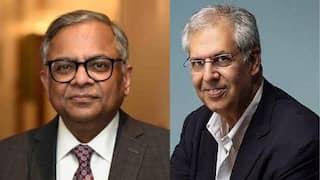
In a Tata Sons boardroom on 17 September 2026, four hands went up for N Chandrasekaran and one went against. The lone dissenter was Noel Tata, who chairs the Tata Trusts, the holder of 66% of Tata Sons.
The vote was meant to keep Chandrasekaran as chairman for the next 5 years. Within days, the Trusts wrote that the 4–1 result carried no legal weight and should be treated as if it never happened. A group that owns two-thirds of the company was outvoted at its own table, then declared the count void.
Control of Indian companies no longer moves only through share purchases. In February 2025, the Burman family made an open offer for 26% of a company. The market gave them 0.07%. Control passed to them anyway. The levers now are rulebooks, debt conditions and regulatory approvals. At Tata Sons, three of them are ticking at once: an RBI clock, a debt clock and a boardroom-rules clock.
Start with the RBI. After IL&FS collapsed in 2018, the regulator required large non-banking finance companies to list on the stock exchange. In June 2026, it tightened the rule: any finance company with assets above ₹1 lakh crore must list. Tata Sons, whose assets the presenter put at between 1.75 and 2 lakh crore, repaid its debt and told the RBI it now owes nothing. It asked to be removed from the list. On 11 September 2026, the RBI refused.
Why would the Trusts resist listing? In FY25, Tata Sons paid ₹2,622 crore in dividends, and ₹1,731 crore of that went straight to the Trusts for philanthropy and cancer hospitals. Public shareholders would ask why money flows into loss-making ventures like Air India or semiconductors. Accountability would change.
The second clock sits inside SP Group, the Shapoorji Pallonji family's business, which holds 18.4% of Tata Sons. SP Group pledged its unlisted Tata Sons shares to raise loans at interest of up to 20%. A roughly ₹3,500 crore installment falls due around September or October. Its lenders wrote into the contracts that they want a liquidity event tied to Tata Sons shares, such as a listing or a share sale.
The debt belongs to SP Group, but repaying it requires Tata Sons to list.
One borrower's repayment schedule now collides with the regulator's deadline. Nobody had to plot it.
The third clock is Article One to One of the Articles of Association. It bars any major board decision unless the Trust-nominated directors approve. The Trusts have sent two: Noel Tata and Venu Srinivasan. Srinivasan voted yes on 17 September. Noel Tata voted no. The Trusts argue that a majority of two directors means two, not one, so under Article 121 the 4–1 vote equals zero. They placed a legal opinion from former Chief Justice D Y Chandrachud before the board.
The chairman's side answers that company law obliges every director, however nominated, to vote for the whole company, not for the Trusts alone. The Supreme Court ruled in the 2021 Cyrus Mistry dispute that the Trusts hold veto power and that the article is not illegal. It never said how the article applies when a chairman's tenure is extended. Both camps now fight inside that gap, with Abhishek Manu Singhvi on Noel Tata's side and Harish Salve on the chairman's.
Two fixes exist. Noel Tata has floated buying out SP Group for about ₹25,000 crore, and splitting Tata Sons into smaller companies to fall below the ₹1 lakh crore line. Experts say a split is tangled in tax and law, and that Tata would have to borrow from the market for the buyout.
Most people read this as a duel of egos. The larger fact is that a borrower's installment, a regulator's threshold and one line about a majority of two can unseat a group's owners.
When the interest clock runs under the treasury and the rulebook gives two different meanings, control is taken in exactly this way.
A group that millions trust is being pulled apart by deadlines no one has to enforce. Whoever wins the first argument over Article 121 may find the market is already waiting outside.