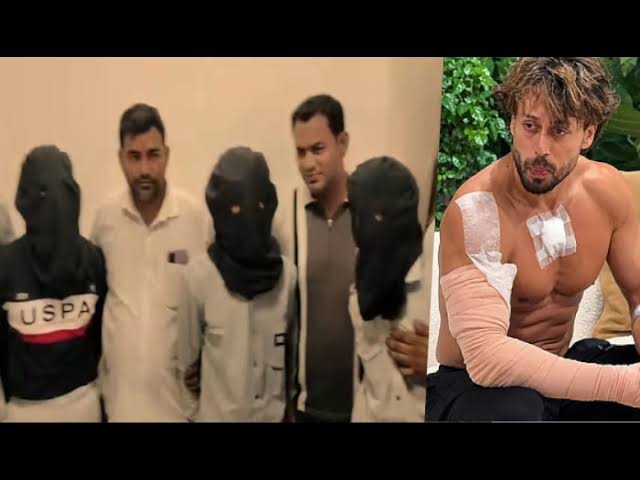
Three men, one motorcycle idling, two guns fired at close range. That was the attack on Tiger Shroff's car as he left a football stadium in Mumbai. He and his driver were injured. Nobody died.
The Bishnoi gang claimed responsibility, blaming Shroff's association with Salman Khan. Police arrested all three attackers in Rajasthan on the day of the broadcast. They were trying to reach Nepal via Delhi. The arrests answer who pulled the trigger. They do not answer who gave the order, or how.
The feud has a long fuse. In the late 1990s, Khan allegedly hunted a blackbuck while filming in Rajasthan. For the Bishnoi community, the blackbuck is a religious symbol. The gang has treated Khan as a target ever since, and anyone close to him is now fair game.
Here is the contradiction. The gang's leader, Lawrence Bishnoi, is 33 years old and from a village in Punjab. He has been imprisoned in Sabarmati Jail in Gujarat since 2015, facing charges of murder and extortion. He still orders killings. US officials claimed mobile phones are smuggled into his cell, and that is how he runs the assassinations. A man locked up for a decade is running an operation across continents. Who is guarding the guards?
The record of attacks he is linked to is long. In 2022, gang members killed Punjabi rapper Sidhu Moosewala. In 2024, his shooters killed former legislator Baba Siddique in Mumbai. The National Investigation Agency (NIA) investigated both cases, and the gang was implicated in each.
Bishnoi gang does not only carry out attacks inside India. They strike abroad as well.
That is no figure of speech. Canada designated the gang a terrorist organisation last year. Last month, the gang sent the Canadian government a message saying it would rule in Canada, and boasted of 5,000 members there. Hardeep Singh Nijjar, a Khalistani separatist, was shot dead in Vancouver in 2023. Canada first accused India of the killing. It now suspects the Bishnoi gang. A claim of state involvement has become a claim of gang involvement, and the diplomatic damage from the first accusation has already been done.
In the United States, the FBI added senior gang leader Goldy Brar to its most-wanted list, with a $1 million reward for information on him. US authorities have charged the gang with murder and extortion. US prosecutors also allege drug trafficking, including cocaine smuggled into the United States, and say that is how the gang funds itself.
This is no longer India's problem alone. It is a global threat.
A gang that finances itself through narcotics, commands members on three continents and directs shootings from custody is no street crew. It is an organisation with revenue, reach and a chain of command that a prison wall has not broken.
For working families in Mumbai, the stakes are concrete. Gunmen on a motorcycle reached a film star outside a public stadium. A former legislator was shot dead in the same city. If the gang can do that to the famous and the connected, nobody on its list of associates is safe.
New Delhi's response was measured. Asked about the charges, the government said it had noted remarks by the RCMP's deputy commissioner, which it said matched the recently unsealed US indictment naming members of the Lawrence Bishnoi group for organised crime. India said it remains committed to working with partners against terrorism and transnational crime. That cooperation is now a test of bilateral security ties, because the gang has a strong presence in North America too.
Three shooters are in custody. The man who sent them is still in a cell with a phone, and two governments abroad want him stopped.