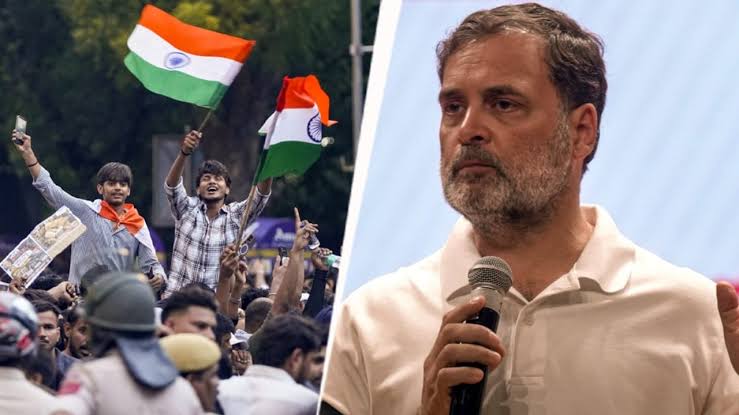
On 16 May, the Cockroach Janta Party opened an Instagram page. By 16 October, five months later, its leaders were in custody or on bail, Jantar Mantar was closed to protesters, and the government's critics were arguing over a word.
The word was "regime change." Senior advocate Prashant Bhushan used it at a Press Club press conference on 15 October, with CJP's Abhijeet Dipke present. Around the same time, a clip of Neha Bora went viral in which she spoke of drawing inspiration from the Bangladesh movement. She later released a video clarifying that she meant progressive student groups, not extremists. Nobody waited for the clarification.
The BJP joined the two remarks, added Rahul Gandhi's presence alongside both speakers, and alleged a foreign-backed plot for violent change of power, as in Nepal and Bangladesh. Congress and the Aam Aadmi Party replied that they do want regime change, but through elections, as India has always done it. Mohan Bhagwat then carried the argument from Delhi to Nagpur. In his Vijayadashami speech he listed France, Albania, Nepal and Bangladesh and asked whether their problems ended when governments fell.
Merely changing the government is no guarantee that problems will be solved.
Bhagwat's line fits a script the party already knew. Senior journalist Rahul Srivastava argued that the framing suits the BJP's sanskritik rashtravad (cultural nationalism), because it tells core supporters that a foreign-aided overthrow would hurt the majority. Ram Mandir has lost some of its pull. A supposed foreign plot may replace it.
The protesters also hurt themselves. The July mood had been organic, and the CJP had no large organisation to repeat it. Delhi Police, accused of mishandling July, came back with paramilitary forces, heavy barricades and a denotified Jantar Mantar. Three CJP leaders announced their travel plans, flew to Delhi together and were detained on the plane. They signed a shanti bond (peace bond) and walked out by evening. Aides told Deccan Herald's Shimon Joy that they should have challenged the detention in a higher court instead.
Sourav Das and Ashutosh Danka then scaled a gate at Jantar Mantar on 13 October. Police detained them again, and they spent seven days in judicial custody. Deep Das was arrested at home on 16 October before a Tiranga march in Connaught Place. Who was running the movement while its leaders sat in police vans?
Congress ran out of steam differently. After the 6 October march to Nirvachan Sadan was stopped midway, and a 12 October march to the Supreme Court, Delhi traders began complaining about daily protests. On 13 October Rahul Gandhi held a tea party at his home. No protest has followed, and he reportedly went abroad.
The Hindu's Nistula Hebbar explained why the BJP can stay calm. In the NEET paper leak protests, she said, the party's own voters were affected. This time they are not.
The crowd gathering in support of this movement is not the BJP's voter.
Her point carries a cost. A government that believes its base is untouched can let the street burn out on its own, and Congress seems to be helping. Senior journalist Vijay Trivedi put it bluntly: the opposition switched off its own stove while making tea. He still believes the government remains under pressure.
The test is near. Rahul Gandhi is expected back on 24 October, a Congress rally is set for Ramlila Maidan on 1 November, and the opposition may return after Diwali. Elections in five states, especially Uttar Pradesh, will decide whether the movement meant anything. The BJP does not need to win this argument. It only needs the street to stay quiet until then.